
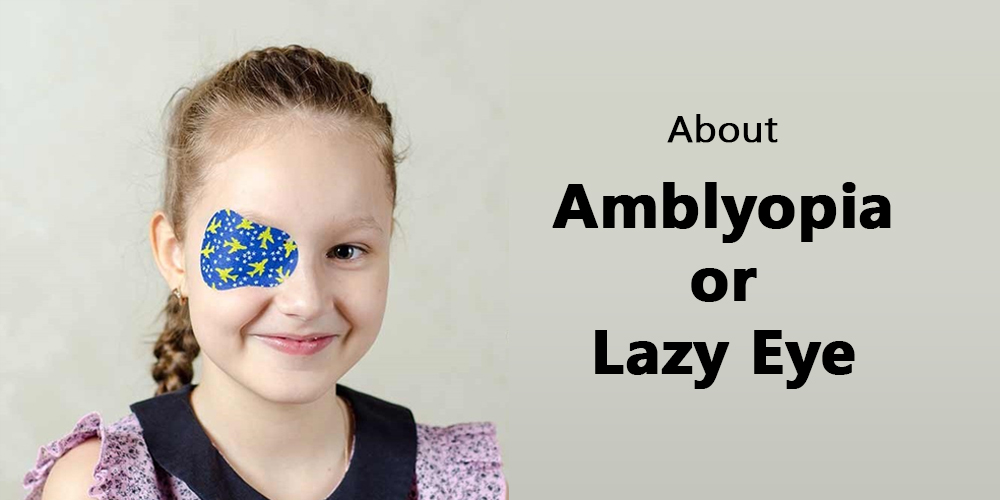
Early Detection & Treatment for Children’s Vision
Amblyopia (commonly known as "lazy eye") is a neurodevelopmental vision disorder where one eye (or rarely both eyes) fails to develop normal visual acuity during early childhood, even though the eyeball appears completely healthy from the outside.
The human brain and visual pathways develop rapidly from birth until approximately 7 to 8 years of age. If one eye sends a blurred, distorted, or misaligned picture to the visual cortex, the brain begins to favor the stronger eye and actively suppresses signals from the weaker eye. Over time, the neural connections between the brain and the weaker eye wither, resulting in permanent vision deficit if not treated in time.
Common Causes of Amblyopia in Children
- Refractive Anisometropia: A significant difference in spectacle prescription between the two eyes (e.g. one eye has normal vision while the other has high astigmatism or hypermetropia). Because the child sees well with the good eye, neither parents nor teachers may notice any problem without a formal eye checkup.
- Strabismus (Squint): Misaligned eyes looking in different directions cause the brain to ignore the turned eye to prevent double vision.
- Deprivation Amblyopia: An anatomical obstruction in the visual pathway — such as a congenital cataract, corneal opacity, or severe drooping eyelid (ptosis) — that prevents light from focusing on the retina during infancy.
Why Timely Treatment is Critical
The earlier amblyopia is identified and treated, the higher the likelihood of fully restoring 20/20 vision. Once visual brain pathways mature after age 8 to 9, treatment becomes significantly more difficult and less effective. This is why every child should undergo a comprehensive eye examination before entering primary school (at age 3 to 4 years).
Treatment Options at Ulwe Eye Clinic
- Corrective Eyeglasses: Often the first and most critical step. Prescribing precision pediatric spectacles provides a crisp image to the retina, allowing the brain to begin utilizing the weaker eye.
- Occlusion (Patching) Therapy: Placing an adhesive eye patch over the child’s stronger eye for a prescribed number of hours daily. This gently forces the brain to rely on and stimulate the visual pathways of the weaker eye.
- Pharmacological Penalization (Atropine Drops): In select children who resist wearing an eye patch, a mild dilating drop (atropine) instilled into the stronger eye temporarily blurs near vision, compelling the child to use the weaker eye for close activities.
- Active Vision Therapy & Near Play: Engaging the child in drawing, coloring, puzzle-solving, and reading while patching to actively stimulate cortical visual processing.
Consult Dr. Susanta Chatterjee
Personalized consultation and advanced treatment at Ulwe Eye Clinic.